



I sell on Online Market places, do I need to do Self Assessment?Yes, Selling online, even occasionally, creates taxable income When You Must File Record-Keeping Tips

I’m no longer Self Employed, How to stop Self Assessments the right wayIf you cease trading, you must notify HMRC to avoid unnecessary penalties. Steps Why It Matters

When to Register to file Self Assessments You must register if, during the tax year, you meet any of the following: Registration Deadline Practical Tips

What Your Self Assessment Should IncludeAccurate reporting ensures compliance and avoids penalties. Income to Include Allowable Deductions

How to pay Self Assessment tax bills (include taxcode adjustments if SA is submitted before 31 December) After filing, HMRC calculates the tax due and provides your unique payment reference. Payment Methods Tax Code Adjustment (Submitting Before 31 December)If you submit before 30 December and meet these criteria, HMRC may collect tax via your PAYE […]

HMRC Self Assessment Penalties (for Late Filing and Payment) HMRC applies penalties automatically if deadlines are missed. Late Filing Penalties Example: If your tax due is £1,000 and your return is 7 months late, HMRC can charge £300 + £50 (5% of tax due) plus daily penalties. Late Payment Penalties

Self Assessment Deadlines (filing and payment deadlines) For the 2024/25 tax year (6 April 2024 – 5 April 2025), HMRC has strict deadlines: Registration Filing Deadlines Payment Deadlines

Corporation Tax and Capital Allowances: Claiming Full Expensing & AIA For UK companies, capital allowances allow businesses to deduct capital expenditure from taxable profits — reducing their Corporation Tax bill. Plant & Machinery:Business-use assets such as machinery, tools, computers, vehicles, and certain fixtures. These typically qualify for capital allowances like AIA and Full Expensing. What […]

Capital Gains Tax (CGT) applies when you sell or dispose of an asset for more than you paid for it. This can include property that is not your main home, shares, cryptocurrency, or business assets. Annual CGT Allowance (2025/26)For the 2025/26 tax year, the tax-free allowance is: You only pay CGT on gains above this […]
Auto-Enrolment Duties for Employers: Workplace Pension ResponsibilitiesWho must be enrolled?You must assess each worker regularly.Criteria: Qualifying Earnings:These are the earnings between £6,240 and £50,270 (2025/26). The minimum 5% pension contribution applies only to this band, not the employee’s full salary. Minimum contribution rates (2025/26) Duties for new employersFrom your first employee, you have duties:

The Autumn 2025 Budget confirmed that employees who are required to work from home will no longer be able to claim tax relief for extra household costs. Right now, under section 336 of the Income Tax (Earnings and Pensions) Act 2003 (ITEPA 2003), employees can claim relief for extra costs caused by homeworking, such as […]

From 1 December 2025, the Financial Services Compensation Scheme (FSCS) deposit protection limit increased to £120,000. This means savers with a UK-authorised bank, building society, or credit union are protected up to £120,000 per person, per firm if the institution fails. Protection for temporary high balances has also risen to £1.4 million. These balances, often […]

Starting 6 April 2026, a new student loan repayment plan, Plan 5, will be introduced by the Department for Education (DfE). This plan will apply to borrowers who began their courses in August 2023 or later and will follow a similar structure to existing Plan types 1, 2, and 4. Key points to note: Employers […]

When buying a rental property, you can own it personally or through a limited company. Each option affects how much tax you pay and how your profits are handled. Personal Ownership Property is in your name. Rent is paid to you directly. Rental profits are taxed at 20%, 40%, or 45%, depending on your income. […]
The penalties will double for companies submitting a Corporation Tax return late from 1st April 2026. This will be legislated for in Finance Bill 2025-26. Late filing penalties were first implemented in 1998 to promote timely submission of corporation tax returns. However, inflation has reduced their real value over time, weakening their original deterrent effect. […]

An ISA is a tax-efficient savings account that allows you to earn interest without paying tax on it. Currently, individuals can contribute up to £20,000 per tax year into a Cash ISA. However, The Chancellor has confirmed in the Autom Budget that the cash ISA limit will be reduced to £12,000 a year from April […]
From 6 April 2027, the government will create separate tax rates for property income on Unincorporated landlords. The income tax rates for property income will be 22% for basic rate, 42% for higher rate and 47% for additional rate. Finance costs, such as mortgage interest, will be relieved at 22% as a tax credit. The […]

From April 2027, savers in the basic rate tax band will pay 22% in savings income tax, up from the current 20%. Higher and additional rate taxpayers will pay 42% and 47% respectively. 2.64 million people already are expected to be hit with tax on their savings this year. The new tax rates are expected […]

In November Autumn Budget, the Chancellor Rachel Reeves confirmed that the basic and higher rates of dividend tax will rise by two percentage points from April 2026. This change will negatively impact on millions of small limited company owners who receive dividends as part of their income. It will also affect investors who rely on […]
A business may cancel VAT registration if: You must notify HMRC within 30 days of becoming eligible to deregister. What happens after deregistration:

The UK offers special VAT schemes to help small businesses simplify VAT reporting and improve cash flow. Standard VAT Accounting SchemeThe most common scheme where businesses charge VAT on sales and reclaim VAT on purchases, submitting VAT returns usually quarterly.
Some businesses provide both taxable and exempt services. This is common in sectors like finance, education, property, and healthcare. If you supply both, you are considered partially exempt — meaning you can only reclaim some of the VAT you pay on expenses. How it works: Annual AdjustmentAt the end of your VAT year, HMRC requires […]

VAT-registered businesses must keep proper records to meet HMRC requirements. You must keep: Record retention:You must keep VAT records for at least 6 years.Digital records are required under Making Tax Digital (MTD) rules unless HMRC grants an exemption.

When your business imports goods or receives services from overseas, special VAT rules apply. Imported goods Imported services Important: Keep all documentation for imports and overseas services and ensure your accounting system handles reverse charge correctly.

Many UK businesses supply a mix of taxable and exempt goods or services. This falls under partial exemption rules. You must register for VAT if your taxable turnover exceeds £90,000 in a rolling 12-month period, or you expect to exceed this threshold within 30 days. This assessment is done excluding the exempt turnover Important notes: […]
Some supplies of goods or services are exempt from VAT, meaning you do not charge VAT on them and they do not count towards the VAT registration threshold. Common exempt services include: Key takeaway:If your business only supplies exempt items, you normally do not need to register for VAT because you’re not making taxable supplies […]
Understanding VAT for Small Businesses Businesses act as tax collectors for HMRC by charging VAT on their sales (output tax) and reclaiming VAT on eligible purchases (input tax). Getting VAT right is essential for both compliance and cash flow management. Moreover, understanding when to register and how to file correctly helps you avoid penalties and […]

Corporation Tax Filing and Payment Deadlines All limited companies must file a Company Tax Return (CT600) every year. Penalties for Late Filing or Payment HMRC imposes penalties if your filing or payment is late or incorrect: Maintaining accurate and timely records helps ensure compliance and prevents unnecessary fines.
Corporation Tax Rates for UK Companies (2025/26) Corporation Tax is the main tax paid by UK limited companies on their taxable profits. Whether you’re a small business or a large enterprise, understanding how the 2025/26 Corporation Tax rates apply helps ensure compliance and efficient tax planning. Corporation Tax Rates for 2025/26 As of April 2025, […]

Individual Savings Accounts (ISAs) remain one of the most tax-efficient ways to save and invest in the UK. Basic ISA Allowances for 2025/26 Types of ISAs

The government is reporting that it has blocked hundreds of thousands of companies with outstanding or potentially fraudulent Bounce Back Loans from dissolving before they would have to pay anything back. It is reported that they have clawed back millions of pounds from companies that took out Covid loans that they were not entitled to, […]

If you’re self-employed, you will be taxed on the profit after claiming business expenses. HMRC allows two approaches: detailed cost calculations or simplified expenses. The latter is especially useful for working from home and vehicle use. Simplified Expenses for Home Working If you work from home at least 25 hours per month, HMRC lets you […]

You may have noticed your take-home pay shrinking, even without a tax rate increase. This is caused by fiscal drag — when tax thresholds stay the same while wages rise, pushing more people into higher tax brackets. A larger proportion of income is now exposed to tax with more taxpayers crossing into higher tax brackets […]

The UK offers two special allowances that can simplify your tax return: the trading allowance and the property income allowance. Each provides up to £1,000 of tax-free income, making them ideal for people with small amounts of extra income. The Trading Income Allowance The Property Income Allowance The Rent a Room Allowance This is a […]

The UK government is rolling out Making Tax Digital (MTD) to modernise the tax system. By moving away from paper records and annual tax returns, HMRC aims to make tax reporting more accurate and efficient. Who Does It Apply To?From April 2026, MTD for Income Tax Self Assessment (ITSA) will apply to self-employed people and […]

Specific Self Employment Expenses: What You Can & Cannot Claim When you’re self-employed in the UK, HMRC allows you to deduct certain costs from your income before calculating your tax bill. These are known as allowable business expenses. Knowing what qualifies can significantly reduce your taxable profit — but getting it wrong can lead to […]

Being self-employed in the UK means you manage your own finances — including paying tax and National Insurance. Unlike employees, who have PAYE deductions made automatically, self-employed individuals must register with HMRC, track income, and complete an annual Self Assessment. Understanding how much you owe and when to pay is essential to staying compliant. Income […]

When you save money in a UK bank, building society or credit union that’s authorised by the Financial Conduct Authority (FCA) and Prudential Regulation Authority (PRA), your money is protected by the Financial Services Compensation Scheme (FSCS). Why this matters: Many savers don’t realise that their deposits are protected. Understanding the FSCS rules can give […]

Many people only glance at their net pay, but a payslip contains crucial details about how your income is taxed and where your money goes. By understanding each section, you can check for errors, avoid overpayments, and budget more effectively. 1. Income Tax and National Insurance (NI) For the 2025/26 tax year, the Personal Allowance […]

One of the easiest tools available for saving money today is Savings Pots (sometimes called “Spaces”), offered by banks and challenger apps like Monzo and Starling. These digital pots let you separate your money into different categories (like folders on your computer), making saving simpler and more motivating. Money RedefinedQuarantining your money into folders is […]

Children who learn how money works early are far more likely to grow up managing their finances well. Here’s how to make those lessons real—with practical tools and current government guidance: Start with the BasicsBegin with simple conversations at home. Explain where money comes from (work, business) and how it’s divided between needs (like food […]
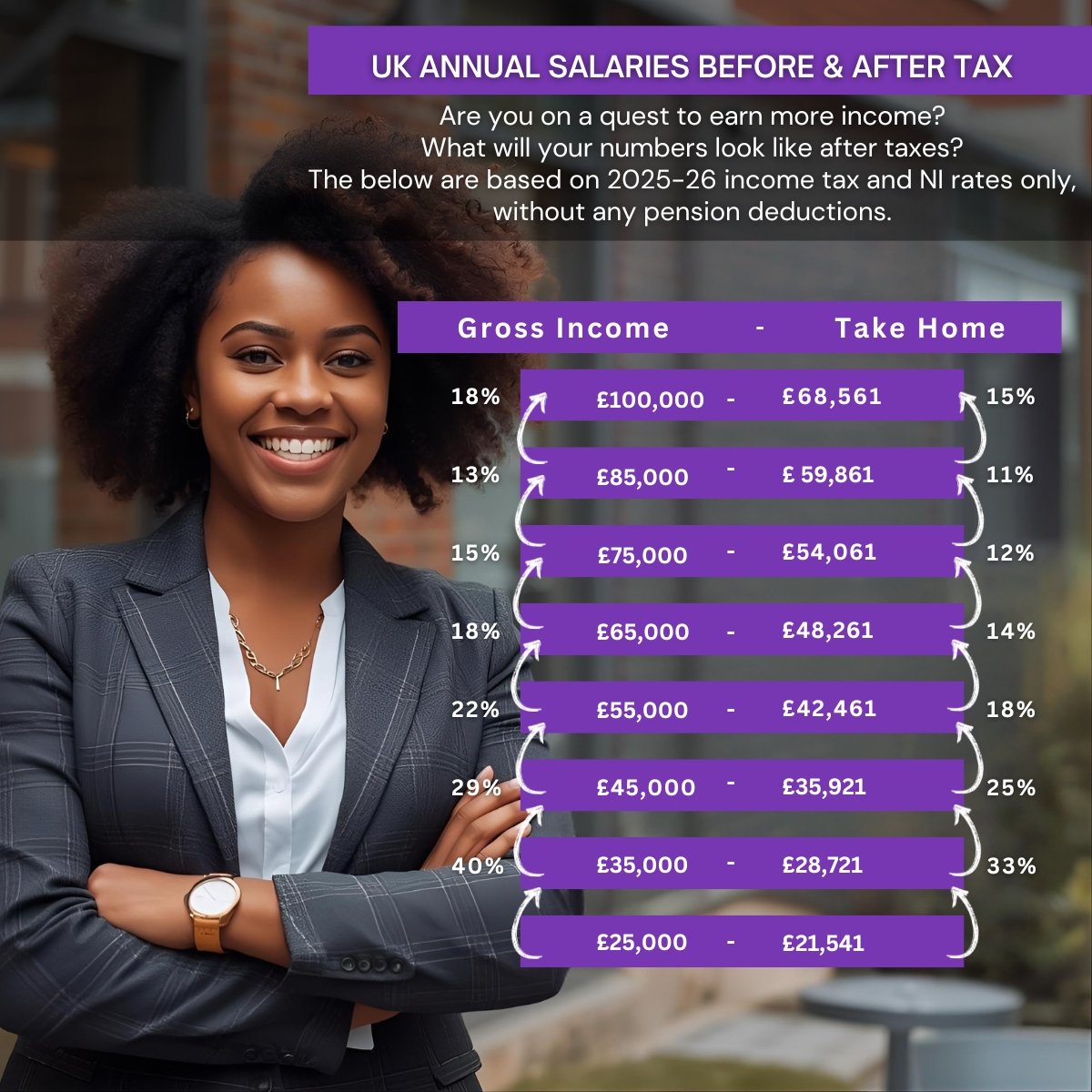
When we talk about salaries, it’s easy to focus on the big number—but what really matters is what you take home after tax. With income tax and National Insurance (NI) contributions deducted, your actual spending power can look quite different. Below is a clear breakdown of UK annual salaries for 2025–26 (excluding pension deductions), showing […]

Financial knowledge/literacy simply means understanding how money works in everyday life. You don’t need to be an expert, but having the basics makes a big difference. Remember: the more you learn, the more confident you’ll feel making financial decisions.

Have you ever felt that there are no pension options when you are no longer full-time employed? Although workplace pensions are the most common way of contributing towards your pension, private schemes are also available and can provide flexibilities to enjoy. NEST is one of the safe pension schemes that support the self-employed with their […]

HMRC have released an important guidance to educate contractors on the nature of tax avoidance schemes being run by umbrella companies. Umbrella companies that encourage taxpayers to use tax avoidance schemes often move workers between different umbrella companies to hide the tax avoidance from HMRC. HMRC does not approve or endorse umbrella companies or tax […]

Budgeting is one of the most important skills for managing money, and the good news is — it doesn’t need to be complicated. At its core, a budget is just a plan that shows how much money comes in and how it is spent each month. Here’s why it matters: 1. Understanding Where Your Money […]
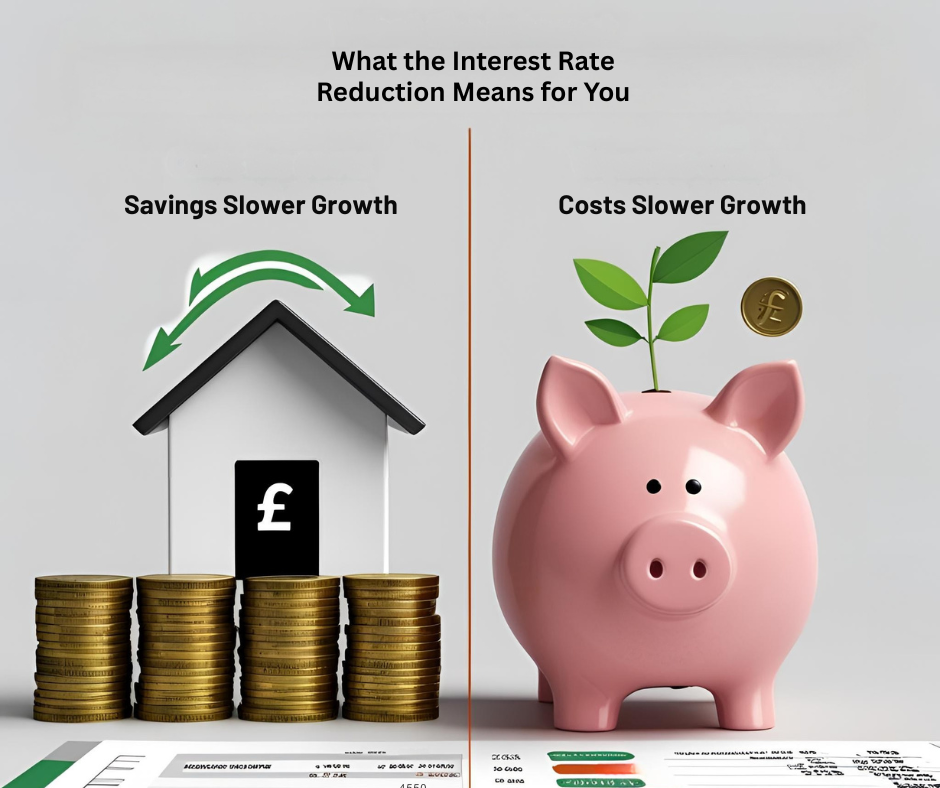
On 7 August 2025, the Bank of England reduced the base interest rate to 4.00% from 4.25%. The aim is to support the economy by making borrowing cheaper. But what does this actually mean for everyday people in the UK? Let’s break it down in simple terms. 1. Impact on Debt (Mortgages, Loans, Credit Cards) […]

From 18 November 2025, all company directors and people with significant control (PSCs) will be legally required to verify their identity under the Economic Crime and Corporate Transparency Act 2023. The mandate will kick in on each company on the day on which the company’s confirmation statement falls due. Every company representative will need to […]
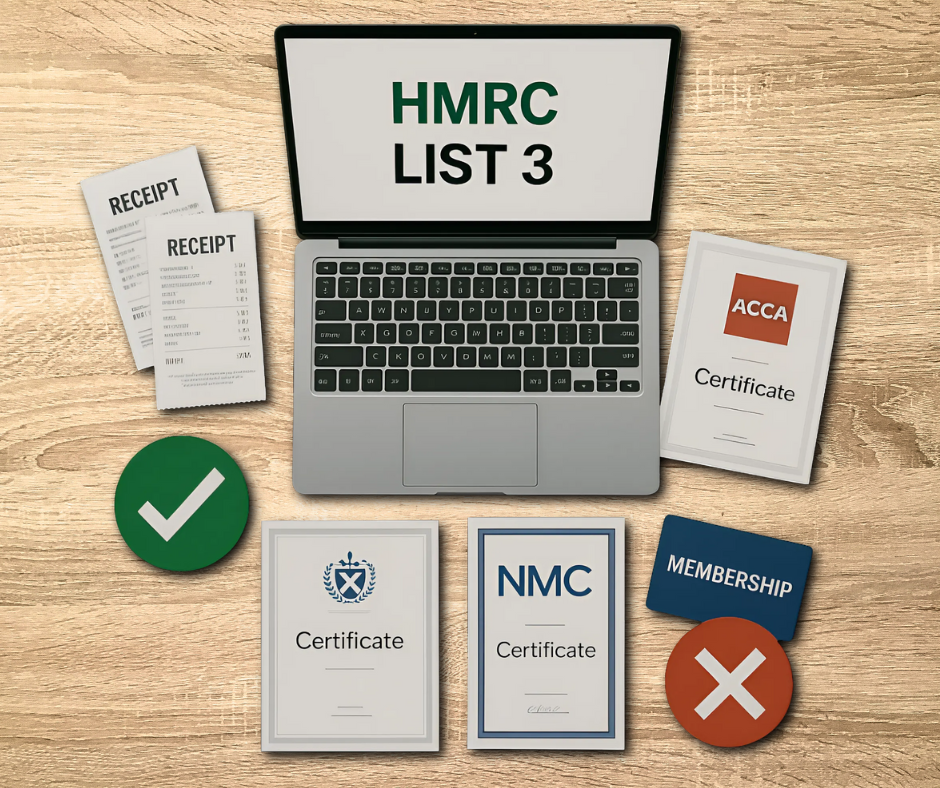
Limited companies can reimburse certain professional fees and membership subscriptions incurred by directors or employees, provided they meet specific HMRC criteria. Key conditions include: The fee or subscription must relate directly to the individual’s profession or role within the business. It must be paid to a recognised professional body included on HMRC’s official List 3 […]

Travel costs incurred wholly, exclusively, and necessarily for business purposes may be reimbursed by a company and are typically not subject to tax. Qualifying business travel includes: Trips to visit clients or suppliers Travel to temporary workplaces Attendance at business-related conferences or training events Reimbursable expenses may include: Public transport fares (train, bus, taxi, flight) […]

Business-related phone costs may be reimbursed when personal devices are used for work. To avoid tax or National Insurance implications, only the portion of phone usage that relates directly to business may be claimed. For directors or employees using personal contracts: An itemised phone bill is required to identify calls or data used for business. […]

When directors or employees carry out work duties from home, limited companies can reimburse part of the household expenses incurred as a result of business use. There are 2 main methods for reimbursing home-working expenses: Flat Rate Method: HMRC allows a company to reimburse up to £6 per week (or £26 per month) without needing […]

To calculate the business expense for a director’s use of a personal vehicle for business journeys in the UK (tax year 2025/26), use the HMRC Mileage Allowance Payments (MAPs). This method reimburses a fixed rate per business mile and is straightforward, tax-free up to the approved rates, and covers all operating costs (fuel, maintenance, insurance, […]

Most Directors think this is a once-a-year effort. Reducing tax liability is a daily thought that involves thinking about the tax implications of all your actions, expenditure and plans for the business and personal. For example, HMRC allows the company to reimburse you for all allowable business expenses incurred personally by the director. The director […]

The UK Government will send a test Emergency Alert to mobile phones across the UK at around 15:00 on 7th September 2025.Emergency Alert to be sent to mobile phones across the UK. This is the second-ever national test of the system. The alert will sound at around 3 p.m. on Sunday, 7th September. The Emergency […]

Starting a budget doesn’t have to be complicated. With just a bit of time and a few essentials, you can get a clear picture of your money: On a piece of paper, you need to record your household income for the month. This should include all disposable income from employments, interests and any forms of […]

You may have noticed a major clean-up at Companies House, as over 11,500 UK-registered companies were struck off following a crackdown led by the National Economic Crime Centre. These companies were found to be non-compliant with registered office rules and were linked to high-risk incorporation practices. Authorities, including HMRC, Companies House, the National Crime Agency, […]

𝗣𝗲𝗿𝘀𝗼𝗻𝗮𝗹 𝗯𝘂𝗱𝗴𝗲𝘁𝗶𝗻𝗴 is the process of understanding, organizing, and managing your income and expenses. It’s about knowing how much money you earn, where it’s going, and what you can do to improve your financial position. Budgeting gives you the clarity and control needed to make confident financial decisions. 𝗪𝗵𝘆 𝗕𝘂𝗱𝗴𝗲𝘁𝗶𝗻𝗴 𝗠𝗮𝘁𝘁𝗲𝗿𝘀 Creating and maintaining a […]

If you’ve provided loans of more than £10,000 to any directors or employees, these may be considered 𝘁𝗮𝘅𝗮𝗯𝗹𝗲 𝗯𝗲𝗻𝗲𝗳𝗶𝘁𝘀. This happens when the loan is employment-related and offered either interest-free or with interest below the official rate. Under the 𝗜𝗻𝗰𝗼𝗺𝗲 𝗧𝗮𝘅 (𝗘𝗮𝗿𝗻𝗶𝗻𝗴𝘀 𝗮𝗻𝗱 𝗣𝗲𝗻𝘀𝗶𝗼𝗻𝘀), a loan is treated as a 𝘁𝗮𝘅𝗮𝗯𝗹𝗲 𝗰𝗵𝗲𝗮𝗽 𝗹𝗼𝗮𝗻 if: It […]

Beginning January 2026, Reporting Cryptoasset Service Providers (RCASPs) will be required to collect your user and transaction data and report to HMRC. These changes fall under the Cryptoasset Reporting Framework (CARF), introduced by the OECD and now adopted by the UK to enhance transparency in crypto tax reporting. The rules will apply to both international […]

Under the Economic Crime and Corporate Transparency Act (ECCTA), changes are coming to the way small and micro companies file accounts. From 1 April 2027, Companies House will require all accounts to be filed using commercial software. Paper forms and the current web-based filing system for accounts will no longer be accepted (though these may […]

Employers will need to note the new government timeline for mandating the reporting and payment of Income Tax and Class 1A National Insurance on benefits in kind (BiKs). Originally planned for April 2026, this requirement will now take effect from April 2027. This extra year is intended to give you—as an employer, payroll professional, or […]

HMRC is reporting that more than 100,000 PAYE clients have been impacted by unauthorized access and filings on their online accounts. They are now in the process of writing to all those clients regarding this issue. These incidents involved criminals using personal information they had already obtained from external sources to impersonate genuine customers and […]

As part of the Government’s Plan to Make Work Pay, changes to Statutory Sick Pay (SSP) are on the way that may affect how you manage employee leave. Through the new Employment Rights Bill, SSP will be strengthened to ensure that all employees have access to it from day one of sickness, regardless of how […]