

What the Interest Rates Reduction Means for Ordinary People
On 7 August 2025, the Bank of England reduced the base interest rate to 4.00% from 4.25%. The aim is to support the economy by making borrowing cheaper. But what does this actually mean for everyday people in the UK? Let’s break it down in simple terms.
1. Impact on Debt (Mortgages, Loans, Credit Cards)
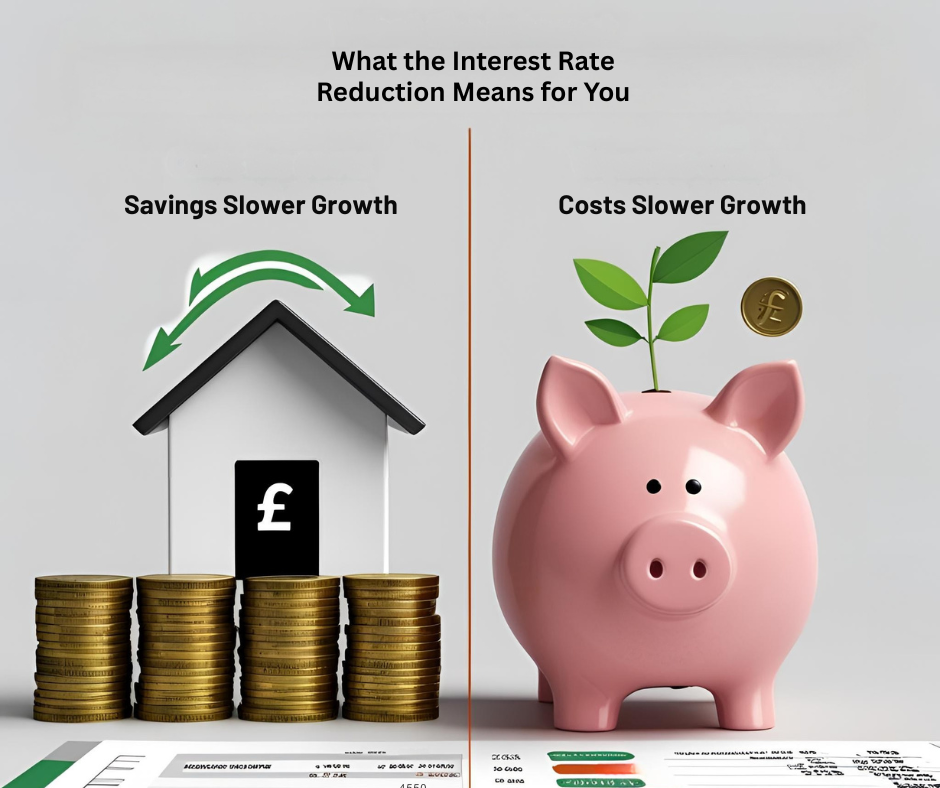
- Mortgages: If you have a variable-rate or tracker mortgage, your monthly payments could fall slightly, putting more money back in your pocket.
- Fixed-rate mortgages stay the same until the deal ends, so you may only notice a change when you remortgage in the future.
- Loans and credit cards may also become a little cheaper if lenders pass on the lower rate.
2. Impact on Savings and Investments
- For savers, lower interest rates usually mean lower returns on savings accounts and cash ISAs. Money held in the bank won’t grow as quickly.
- For investments and pensions, lower rates can sometimes push investors towards stocks, bonds, or other opportunities to find better growth.
3. Everyday Living
- Cheaper borrowing can encourage households and businesses to spend and invest more, which helps boost the wider economy.
- However, if the cost of living is still high due to inflation, the benefits of lower interest rates may not feel immediate in your day-to-day budget.
Final Thoughts
- The reduction in interest rates has both positives and drawbacks.
- Helpful for people repaying mortgages, loans, or other debt.
- Less rewarding for savers hoping to grow their money.
In the end, the impact depends on your personal financial situation. A small change in interest rates may not feel dramatic, but over time it can affect how much you pay on borrowing — and how much your savings grow.